What is Software Development?


Bakslash editorial
September 27, 2026
Comparte este artículo
Introduction
In today's digital era, software development has become an essential skill for entrepreneurs and computer science students alike. From creating mobile applications to managing complex systems, software development is the engine driving innovation and efficiency across diverse industries.
What is Software Development?
Software development refers to the process of conceiving, specifying, designing, programming, documenting, testing, and debugging applications and frameworks that result in a software product. This process includes a series of stages spanning from initial planning to ongoing maintenance.

software development what is it - methodologies
Types of Software:
- System Software: Includes operating systems and hardware management tools.
- Programming Software: Tools used by developers, such as compilers and debuggers.
- Application Software: Programs that help users perform specific tasks, such as office applications and mobile apps.
- Embedded Software: Used in devices such as automobiles and industrial robots.
Traditional Methodologies vs. Agile Methodologies
There are different approaches to software development, and each has its advantages and disadvantages. Below, we'll compare traditional methodologies with agile methodologies.

Software Development and Scrum
Traditional Methodologies:
- Waterfall Development: A sequential approach where each phase must be completed before moving to the next one.
- Advantages:
- Clear requirements from the start.
- Easy to manage and understand.
- Disadvantages:
- Inflexible to changes.
- Can result in delays if errors are discovered late in the process.
Agile Methodologies:
- Agile Development: An iterative and flexible approach that adapts to changes rapidly. It uses short delivery cycles called sprints.
- Advantages:
- Greater flexibility and adaptation to changes.
- Continuous feedback and constant improvement.
- Disadvantages:
- Requires constant collaboration.
- Can be difficult to manage without good communication.
Agile Software Development
Agile development focuses on continuous collaboration and rapid delivery of small increments of functionality. Here we delve deeper into its principles and benefits.

software development team
Agile Principles:
- Collaboration over contract negotiation.
- Responding to change over following a rigid plan.
- Individual interactions over processes and tools.
- Functional software over extensive documentation.
Benefits:
- Fast and frequent deliveries.
- Better alignment with client needs.
- Greater ability to adapt to changes.
What Are Software Development Methodologies For?
Software development methodologies are crucial for structuring and organizing the software creation process. Below, we explore some practical applications.
Practical Applications:
- Managing Complex Projects: They facilitate the organization and planning of large, multifaceted projects.
- Resource Optimization: They help utilize resources efficiently, reducing costs and time.
- Quality and Consistency: They ensure that software meets required standards.
Choosing the Right Methodology
Selecting the correct methodology depends on several factors. Here we provide some recommendations.
Factors to Consider:
- Size and Complexity: Larger projects may benefit from traditional methodologies, while smaller and more dynamic projects are better suited to agile methodologies.
- Team and Collaboration: The availability of an experienced team and the need for constant collaboration can influence the choice.
- Flexibility Requirements: Projects that anticipate many changes benefit from agile approaches.
Difference Between Kanban and Scrum
The methodologies Kanban and Scrum are two popular approaches within Agile that help teams improve their effectiveness and adaptability in project management. Below, we explain their differences, what types of projects you should consider using each for, and which works best depending on team size.
Kanban:
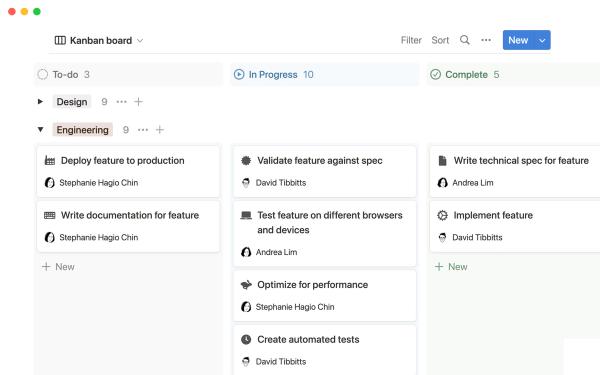
software development kanban methodology
- Continuous Flow: Kanban is based on continuous workflow, meaning it has no defined sprints. Instead, tasks move through different stages of a board, allowing work to flow constantly. This enables teams to respond quickly to changes and prioritize tasks based on current demand.
- Ideal for: Projects with changing needs and no strict deadlines. It's particularly useful in environments where priorities can shift frequently, such as software development in response to customer feedback or maintenance of existing products.
- Team size: Kanban adapts well to teams of any size, as its flexible approach allows several members to work on tasks simultaneously without complicated coordination.
Scrum:
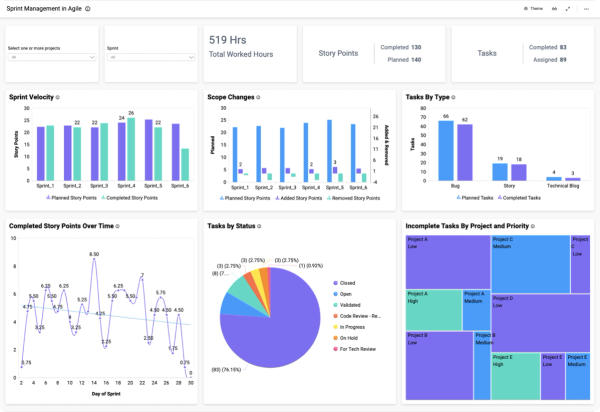
sprint scrum example software development
- Iterative Approach: Scrum divides work into sprints of fixed duration, typically two to four weeks. Each sprint begins with detailed planning and ends with a review, allowing teams to reflect on what's been achieved and make adjustments for the next cycle. This approach fosters constant collaboration and communication among team members.
- Ideal for: Projects that require frequent deliveries and have clear short-term objectives. Scrum is excellent for teams working on developing new products or features that need to be launched at regular intervals, as it allows setting concrete goals and continuously evaluating progress.
- Team size: Scrum works best with small to medium-sized teams (3 to 9 members), as communication and collaboration are essential to sprint success. Larger teams may find it challenging to coordinate and manage time effectively.
Both methodologies have their advantages and disadvantages, and the choice between Kanban and Scrum will depend on the specific characteristics of your project, the environment in which your team works, and the number of members.
Examples of Software Development
Below, we present some use cases that illustrate how software development is applied in different contexts, highlighting its importance and versatility in today's world.
Use Cases:
- Validating an MVP (Minimum Viable Product): A development team launches a basic version of a food delivery application to test market acceptance. They gather user feedback to adjust features and improve the experience before investing in large-scale development.
- Mobile Applications: The development of mobile applications has revolutionized how we interact with technology. Popular applications like Instagram and WhatsApp not only facilitate communication and image sharing but have also created global communities, enabling users to connect and share in real time, changing the social landscape.
- Enterprise Systems: Customized solutions for businesses, such as Customer Relationship Management (CRM) and Enterprise Resource Planning (ERP) systems, are fundamental for optimizing operations and resource management in organizations. These systems enable businesses to manage their data effectively, improve internal communication, and increase operational efficiency, which in turn translates to better customer service and increased profitability.
- Embedded Software: This type of software is essential for the operation of devices in sectors such as automotive and robotics. Embedded programs control a wide range of functions, from engine management in cars to controlling robotic arms in factories. Their development requires a specialized approach, as they must be highly efficient and reliable, operating in environments where safety and precision are critical.
- Artificial Intelligence and Language Models (LLMs): The implementation of artificial intelligence models has transformed numerous fields, from customer service to medicine. Chatbots powered by LLMs provide instant and personalized responses, improving user experience. Additionally, in data analytics, AI models help predict trends and behaviors, enabling businesses to make informed and strategic decisions.
In summary, software development manifests in various forms and contexts, each with its own set of challenges and opportunities, demonstrating its impact on our daily lives and the advancement of technology.
Conclusion
Software development is much more than writing code; it's a dynamic process in constant evolution that drives innovation across all sectors. As we move forward, we see how agile methodologies, artificial intelligence, and embedded software are redefining what's possible in the digital world.
Key points to remember:
The choice between traditional and agile methodologies depends on the project context.
Agile development, with its variants like Scrum and Kanban, offers flexibility and adaptability.
Software impacts every aspect of our lives, from mobile applications to complex enterprise systems.
AI and language models are opening new frontiers in software development.
For entrepreneurs and computer science students, the path to success in software development involves:
- Staying up to date with the latest technologies and methodologies.
- Practicing adaptability and continuous learning.
- Collaborating effectively in multidisciplinary teams.
- Focusing on solving real problems and creating value for users.
The future of software development is exciting and full of opportunities. Whether you're launching an MVP, developing an innovative mobile application, or implementing AI systems, the knowledge and proper application of development methodologies will be your competitive advantage.
We invite you to take the next step in your software development journey. Do you have a project in mind or seeking guidance for your career? Our team of experts is ready to help you navigate this exciting field. Schedule a consultation today and start building the future with code.