What is React? JavaScript Library

Bakslash editorial
September 27, 2026
Comparte este artículo
Introduction to React
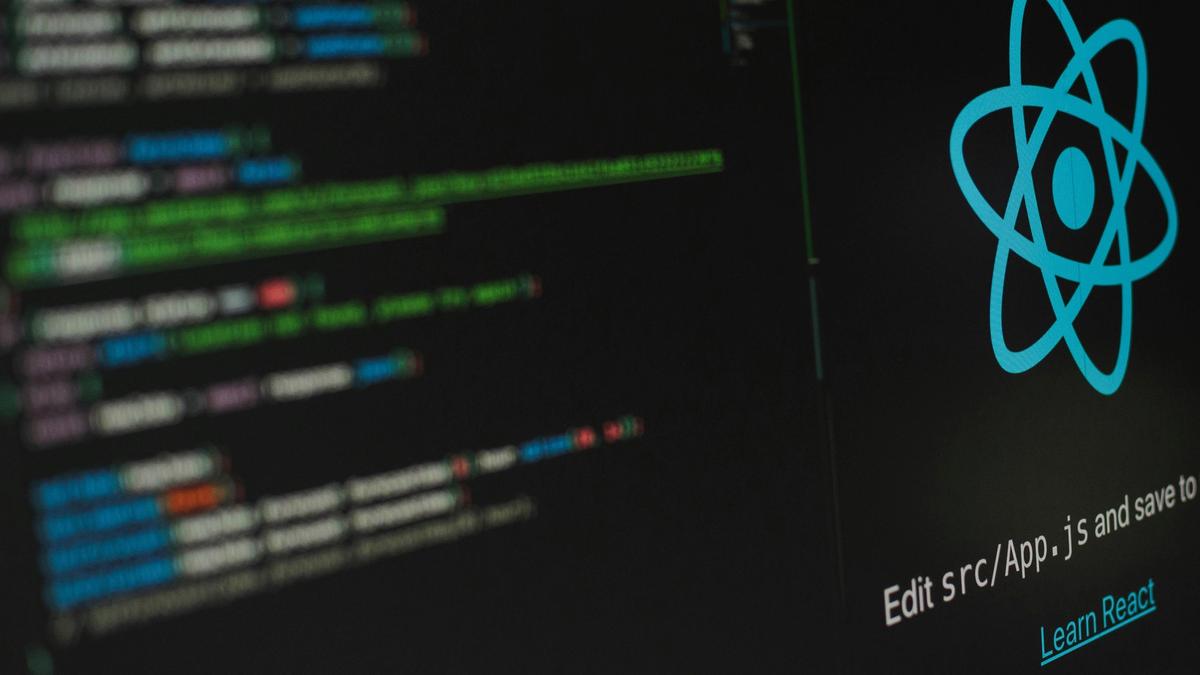
React is a JavaScript library for building user interfaces. Meta (then Facebook) released it in 2013, and since 2026 it has been governed by the React Foundation, under the Linux Foundation. This article covers what React is, how to start a project today and what changed in its latest versions.
Components and State: The Heart of React
UI Components React Development
The core of React is its component-based architecture. This structure enables developers to build complex user interfaces using small, isolated pieces of code. React components can be as simple as a button or as complex as an entire page.
State is the data that changes while someone uses the app. When state changes, React re-renders the component and updates only what changed on screen.
An example: a counter
import { useState } from "react";

export default function Counter() {
  const [clicks, setClicks] = useState(0);

  return (
    <button onClick={() => setClicks(clicks + 1)}>
      You clicked {clicks} times
    </button>
  );
}useState stores the number of clicks. Each click calls setClicks, React runs the function again and the button shows the new value. You never touch the DOM by hand.
How to Start a React Project Today
Create React App, the tool many teams used for years, was deprecated for new projects in February 2025. The official docs recommend starting with a framework:
- Next.js: server rendering, static generation and file-based routing. It's what we use at Bakslash for websites and web apps.
- React Router: routing and data loading, with optional server rendering.
- Expo: mobile apps with React Native.
If you don't need a framework, Vite sets up a project in seconds: run npm create vite@latest and pick the React template.
The React Ecosystem
- Redux: global state for large applications.
- TanStack Query: fetching and caching data from APIs.
- React Native: native mobile apps with the same React concepts.
Some facts:
- In the 2025 Stack Overflow survey, 44.7% of developers who answered about web frameworks had worked with React in the past year.
- It's used by Meta (Facebook and Instagram), Netflix and Airbnb.
React and Single-Page Applications

Modern Web Applications with React
With the rise of single-page applications (SPAs), React has positioned itself as an indispensable tool. SPAs provide a smoother user experience by loading all necessary content on a single web page and dynamically updating that page as the user interacts with the application.
React facilitates the creation of SPAs thanks to its ability to efficiently update specific parts of a page without needing to reload it completely. This results in web applications that feel as responsive as native applications.
An SPA that renders everything in the browser has a cost: the initial HTML arrives almost empty and search engines have a harder time reading it. If your site depends on Google, have the server send the content already rendered. That's what frameworks like Next.js do.
Recent React Updates
- React 19 (December 2024): stable Server Components, Actions for forms and new hooks like useActionState and useOptimistic.
- React Compiler 1.0 (October 2025): optimizes components automatically, without writing useMemo or useCallback by hand.
- React 19.2 (October 2025): adds the Activity component and the useEffectEvent hook.
- Hooks (since React 16.8): let you use state and other React features without writing classes.
Conclusion: Why Use React in Your Project

Team Working on React Development
React has become a solid foundation for web development. Here's why it's worth considering for your next project:
- Reusable components: you write a piece once and use it across the app, which speeds up development and makes maintenance simpler.
- Efficient updates: React changes only what's needed on screen, and the compiler optimizes components for you.
- Broad ecosystem: there are proven libraries for routing, data, forms and testing.
- Large community: plenty of documentation, examples and answers to common problems.
- Reasonable learning curve: if you know JavaScript, you'll build your first components in a few days.
- Web and mobile: with React Native you reuse what you know to build native apps.
- Open governance: the React Foundation, under the Linux Foundation, keeps the project going.
- SEO with a framework: with Next.js the content arrives rendered from the server, so search engines read it without waiting for JavaScript.
At Bakslash we build with React and Next.js: websites, web apps and internal dashboards. If you're starting a project or want to modernize an existing interface, we can help.
Have a project in mind? Book a free consultation with our team.
Sources
- React: Sunsetting Create React App, February 14, 2025.
- React v19, December 5, 2024.
- React 19.2, October 1, 2025.
- React Compiler, official docs.
- Stack Overflow Developer Survey 2025: Technology.